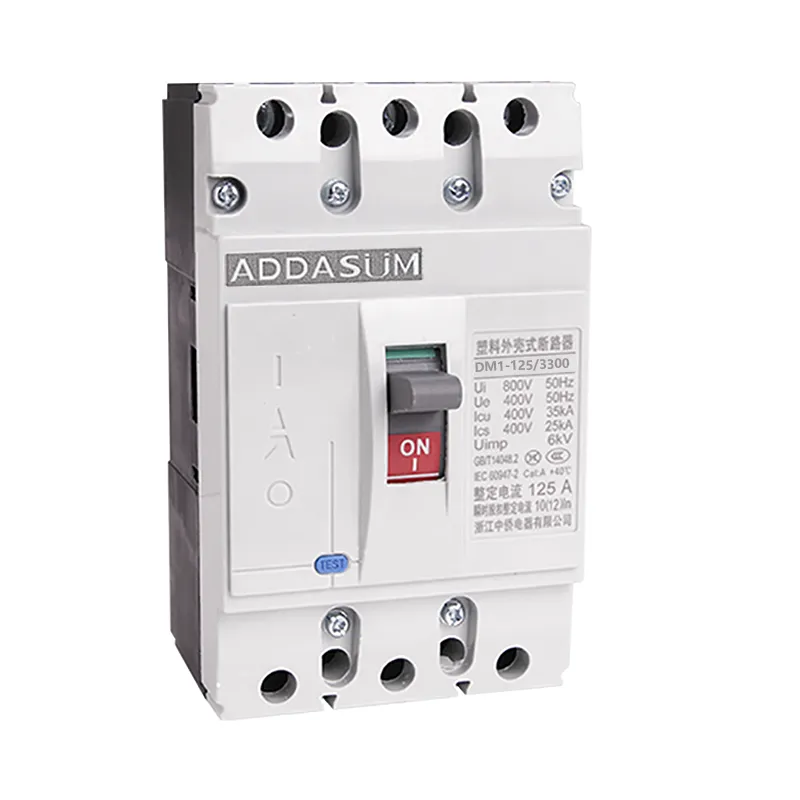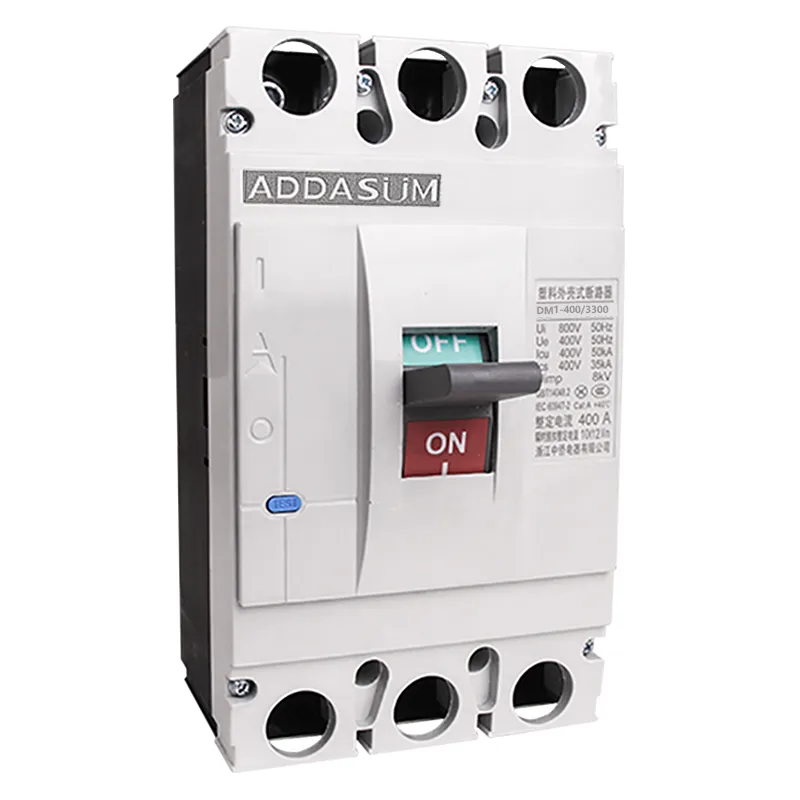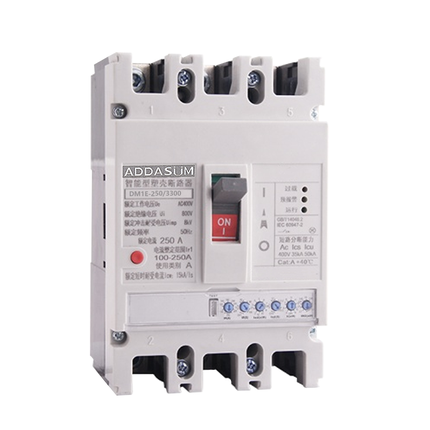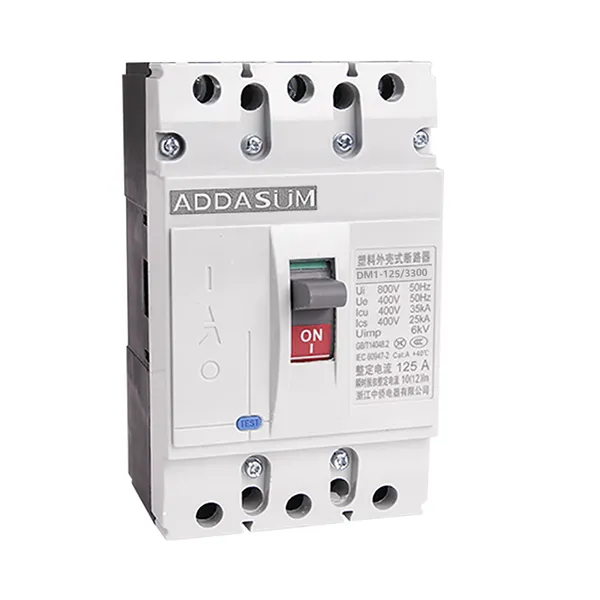

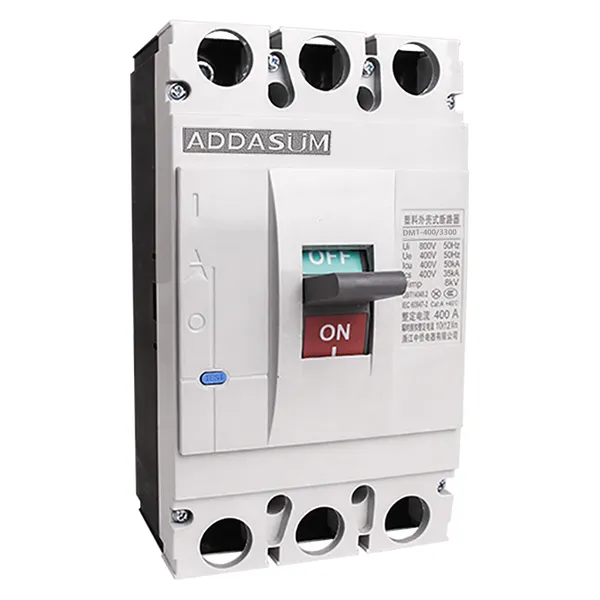


DM1 series circuit breaker, is the new upgraded product developed with advantages of similar international products and domestic and foreign market demand.
Molded case circuit breakers are electrical protection devices that are designed to protect the electrical circuit from excessive current. This excessive current can be caused due to an overload or short circuit. The molded case circuit breakers can be used in a wide range of voltages and frequencies with a defined lower and upper limit of adjustable trip settings. In addition to tripping mechanisms, MCCBs can also be used as manual disconnection switches in case of emergency or maintenance operations. MCCBs are standardized and tested for overcurrent, voltage surge, and fault protection to ensure safe operation in all environments and applications. They work effectively as a reset switch for an electric circuit to disconnect power and minimize damage caused by a circuit overload, ground fault, short circuits, or when current exceeds the current limiting.
The moulded case circuit breaker is a metal enclosure that holds a set of moving contacts inside. The metal case provides overcurrent protection and can absorb excess voltage surges while the contacts open automatically to relieve the current overload safely. MCCBs come in different ratings, so it’s important to choose the right type according to control panel current rating, short-circuit capacity, insulation requirements, and electrical system voltage. They also have higher interrupt ratings than miniature circuit breakers to serve high-power industrial and commercial applications, such as control panels, OEM, and electrical distribution equipment.
In MCCB, rated short circuit breaking capacity refers to the breaking capacity under specified conditions. After the specified test procedure, it is necessary to consider that the circuit breaker continues to carry its rated current. In order to meet the needs of different users, many circuit breaker manufacturers now divide the short-circuit breaking capacity of the same shell rating current into different levels, and users can choose the appropriate circuit breaker according to their needs from the minimum to the maximum current circuit breakers. They are so common and found in almost any building or structure that they are often taken for granted. Yet, they play an essential role in our electric grid system and should be maintained to keep up with the latest safety standards.
MCCBs provide an instantaneous response to a short circuit fault current, based on the principle of electromagnetism. The MCCB contains a solenoid coil that generates a small electromagnetic field when the current passes through the MCCB. The MCCB uses a temperature sensitive device (the thermal element) with a current sensitive electromagnetic device (the magnetic element) to provide the trip mechanism (thermal magnetic) for thermal protection and isolation purposes. During normal operation or normal conditions, the electromagnetic field generated by the solenoid coil is negligible. However, when a short circuit fault occurs in the circuit, a large current begins to flow through the solenoid and, as a result, a strong electromagnetic field is established which attracts the trip bar and opens the contacts.